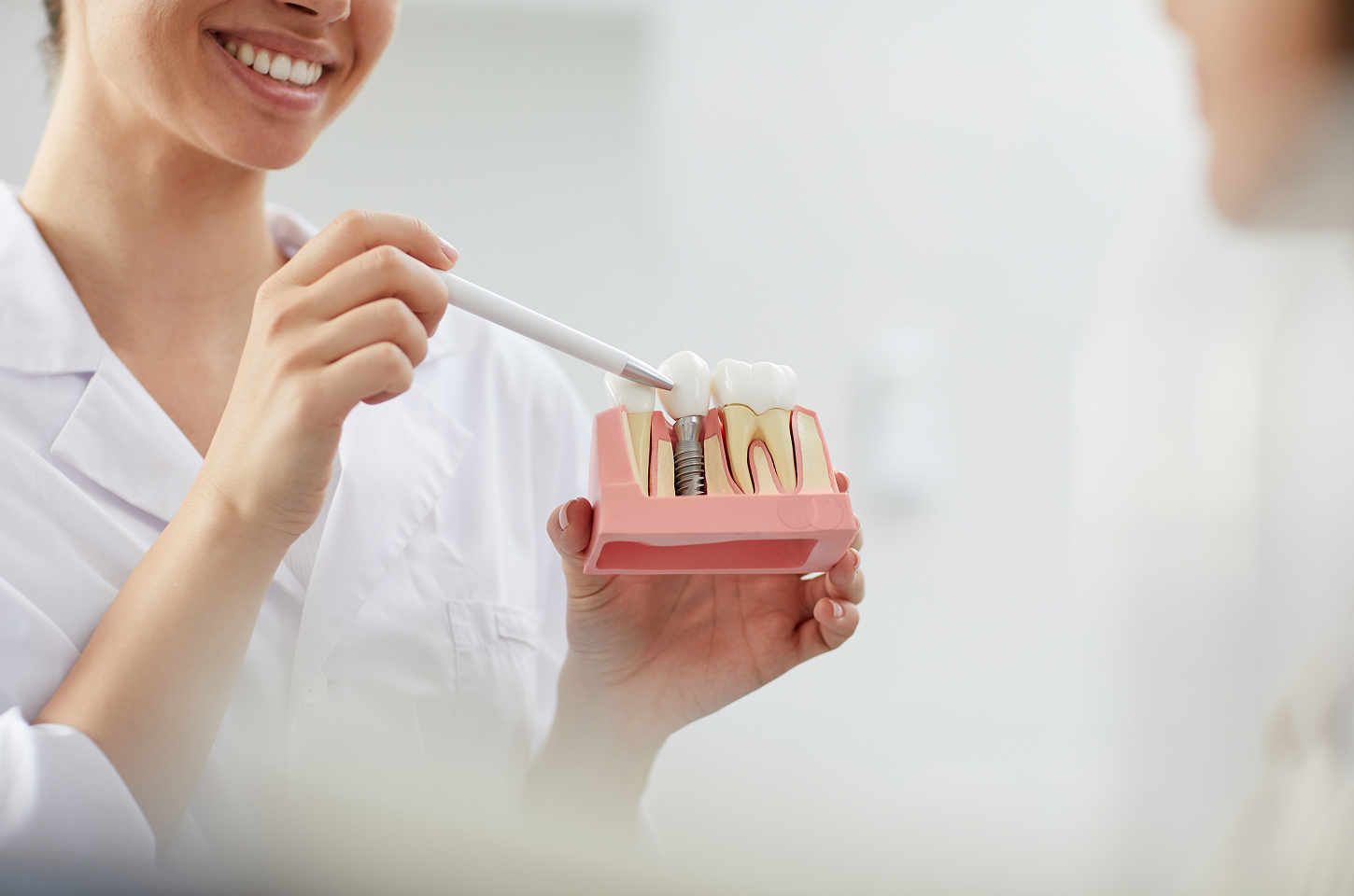
Dr. Shue Her explains that at Lifetime Dental, handling dental emergencies quickly and compassionately is a top priority. He emphasizes the frustration patients feel when told to wait for care and shares that his team works hard to get emergency patients seen and treated the same day if possible. Dr. Her and his staff treat every emergency with empathy, understanding the urgency and distress that come with dental pain or accidents. Patients can expect kindness and a genuine effort to relieve their pain and restore comfort from the first phone call to their visit in the dental chair. Dr. Her encourages anyone experiencing a dental emergency to call Lifetime Dental for prompt, compassionate care.
Looking for an Emergency Dentist in Gainesville, GA? Find Compassionate Care at Lifetime Dental
It’s the sharp pain that wakes you up in the middle of the night. The cracked tooth that makes you hide your smile. The accident that leaves you scared and wondering, “What do I do now?” Dental emergencies don’t wait for the right time. They strike when you least expect it, and the fear, anxiety and uncertainty they cause can leave you feeling helpless. If you’ve ever faced a dental crisis, you know it’s about more than just teeth, because your comfort, your confidence and your peace of mind matter. The caring team at Lifetime Dental of Gainesville is here to help you navigate a dental emergency.
When Every Minute Feels Like Forever
Nothing is more frustrating than calling a dental office in pain or panic, only to be told, “Well, we can see you in two weeks.” Dr. Shue Her at Lifetime Dental in Gainesville, GA, knows just how important it is to feel seen and helped during these moments. “One of the most important things that we do here at Lifetime Dental is seeing emergencies. We take great pride in trying to get our emergency patients in as soon as possible. We also try, if possible, to give you treatment that same day. Sometimes it’s not possible. We give our very best effort.”
Maybe you’ve had a chipped front tooth and dreaded leaving the house. Or you’ve sat with throbbing pain, delaying your call because you worry about the cost, the time away from work or just the fear of being judged. At Lifetime Dental, we see you. We understand that every emergency is urgent to the person experiencing it. Dr. Her puts himself in your shoes, sharing, “For me, I try to look at it as if it were me. If I were having a medical emergency or a dental emergency, I would love to be seen as soon as possible. And if I had a chip in that front tooth, please don’t make me go around with that chip in that tooth. So, for us, dental emergencies are very important.”
Real Emergencies, Real Relief in Gainesville, GA
We’ve had patients walk through our doors with tears in their eyes, clutching their jaw or covering their mouth. One Gainesville mother told us, “I was embarrassed by my broken tooth and scared of the cost. From the first phone call, the staff made me feel safe. They got me in that day and fixed my tooth so I could smile at my daughter’s graduation.” A patient in dire need of an emergency dentist shared, “I’d been in pain for days. Other offices made me wait, but Lifetime Dental treated me with urgency and kindness. The relief was immediate.”
Our front desk team is highly trained to recognize urgency. “If you have a dental emergency, call us… The team at Lifetime Dental and who answer the phones right here, they are trained to get you in here as soon as we possibly can because of the nature of the emergency. They’re trained, and they have a lot of compassion and empathy and they want to try to help you just as much as if it were happening to them,” Dr. Her explains.
You’re Not Alone In A Dental Emergency
In the middle of a crisis, it can be hard to think straight, but for our team, the focus is on compassionate care. Dr. Her notes, “We understand that dental emergencies, when it happens, whether it’s an accident or if you fall, it’s very difficult to get on the phone and to try to clear your mind. We at Lifetime Dental will treat you with compassion and understanding from the time we pick up the phone call with you to the time we see you in the chair. The compassion is what we want to show you in our understanding about the urgency of the situation, and also just trying to make you comfortable and understand that we’ll do our very best to help you during this time.”
The Pain No One Should Have to Live With
One of the hardest parts of a dental emergency is the pain, sometimes described as worse than any other pain. Dr. Her knows how urgent this is, empathizing, “And one of the worst aspects of a dental emergency sometimes is just pain. Dental pain is many times described to me, unlike most other pains right there. It feels like there’s nowhere to go, and we want to do our very best to try to relieve that pain from you. Living with pain is not something I want my patients to do. So if you do have a dental emergency that involves pain, give us a call. We want to treat you.”
How Emergency Dentistry at Lifetime Dental Makes a Difference
What sets Lifetime Dental apart is not just our clinical skills, but our commitment to treating you with empathy and urgency. We work hard to offer same-day appointments whenever possible. If you call, you’ll be met with a calm, understanding voice; never a recording or a rushed answer. When you arrive at 1419 Pearce Cir, Gainesville, GA, our team will welcome you, listen to your story and do everything we can to get you relief fast. We’ll explain your options honestly, discuss your costs and payment options openly and never pressure you into treatment you don’t need.
We know you may be anxious about the bill or about missing work. Our team will help you navigate your insurance, prioritize your treatment and find solutions that fit your needs. Whether you’re dealing with a lost filling, a broken tooth, an abscess or sudden pain, you’ll get the same caring, respectful treatment we’d give our own families.
Find Compassionate Emergency Care at Lifetime Dental of Gainesville
If you’re in pain, worried or not sure what to do, you don’t have to face it alone. Call Lifetime Dental of Gainesville at (770) 536-6688. Even if you’re not sure your situation is an emergency, we’ll listen and help you decide. You deserve relief, reassurance and to feel like someone is truly on your side.
Dental emergencies are scary, but getting help shouldn’t be. When you call us, you’ll get a team ready to do everything possible to help. Your comfort, your health and your peace of mind are our top priorities today and every day.
Dr. Shue Her, DDS – Author Bio
Dr. Shue Her, DDS, is an experienced general and emergency dentist serving Gainesville, GA, and the surrounding area. Renowned for his quick response and compassionate care, Dr. Her specializes in providing prompt relief for dental emergencies, from sudden pain to accidents and urgent repairs. His patient-first philosophy and commitment to treating every emergency with empathy have made him Gainesville’s trusted expert for those in need of immediate dental attention.
Dr. Shue Her explains that many patients prefer to have their dental work completed in as few appointments as possible. He offers sedation dentistry as a solution, which allows patients to relax comfortably during longer appointments. This approach lets Dr. Her complete more dental work efficiently in one or two visits, saving patients time and reducing the number of trips to the office. He understands that while visits can be pleasant, most people would rather minimize the time spent at the dentist.
How Sedation Dentistry Helps For Long Dental Appointments in Gainesville, GA
The thought of a long dental visit can send your heart racing. Maybe you’re worried about pain, discomfort or just the idea of sitting in the chair for hours. If you feel anxious, nervous or simply exhausted by the idea of multiple appointments, you’re not alone. At Lifetime Dental of Gainesville, you deserve a dental experience that feels safe, simple and comfortable.
Our Approach to Long Dental Appointments in Gainesville, GA
Dental anxiety is often about the fear of the unknown. We see you and we understand your concerns, and that’s why Lifetime Dental of Gainesville makes sedation dentistry an option for patients who need longer or more complex treatments.
Dr. Shue Her asks, “Would you prefer to do a lot of this work in multiple short appointments? Would you like to do this in one or two longer appointments?” He shares, “Most of the time, patients say, ‘Oh, please, if we can do it in, you know, as few appointments as possible, let’s do that.’”
How Sedation Dentistry Makes Long Appointments Easier
Sedation dentistry is an option for anyone who wants to feel relaxed and at ease during complex or time-consuming treatments. With sedation, you can comfortably rest while your dentist completes the required work. Dr. Shue Her explains, “Sedation allows us to do that because as you’re comfortably resting in the chair while I’m doing the work, it really allows me to really focus and just get so much of this done at the same time. So, it’s a wonderful tool to be very efficient and trying to save the patient a lot of time and number of appointments.”
Sedation dentistry allows us to complete more of your treatment in a single visit. This means fewer trips to our office, less time off work and less disruption to your routine. One sedation patient told us, “I was worried about having to come back so many times. With sedation, Dr. Her did everything in just two visits. It made such a difference for my schedule and my peace of mind.” We picture a world where dental care fits your life, not the other way around.
Is Sedation Dentistry Right for Your Next Long Appointment?
If you’re facing extensive dental work in Gainesville or our surrounding communities, sedation dentistry might be the answer you’ve been searching for. It’s safe, effective and can make even the longest appointments feel more manageable. Whether you need a little work or a lot, we can talk about how sedation dentistry can help you feel comfortable and get back to your life faster.
One Lifetime Dental review shared, “I put off my dental work for years because I was scared I wouldn’t be able to sit through it. The sedation made it feel like no time had passed at all. Now I have my smile back, and I’m not afraid to come back for checkups.”
Addressing Your Concerns With Compassion At Lifetime Dental of Gainesville
We know cost can be a concern when it comes to your dental health. Sedation dentistry is an investment in your comfort and your future health. Our team is here to help you understand your options, work with your insurance and explain payment plans so you never feel uncertain about your care.
Your comfort is our top priority at Lifetime Dental of Gainesville. We take the time to answer every question and listen to every concern. When you visit our office at 1419 Pearce Cir, Gainesville, GA, we want you to walk out feeling respected, relieved and ready to smile again. It’s the goal of our entire team to make your experience as easy as possible.
Make Your Appointments More Comfortable With Sedation Dentistry
If you’ve been putting off dental work because of fear, time or uncertainty, you’re not alone. Sedation dentistry can help you get the care you need comfortably, safely and with fewer appointments. Call Lifetime Dental of Gainesville today at (770) 536-6688 to schedule your sedation dentistry consultation with Dr. Shue He, and make your next dental visit in Gainesville, GA, the one you actually look forward to. Because your health and comfort matter.
Dr. Shue Her, DDS – Author Bio
Dr. Shue Her, DDS, is a trusted leader in sedation dentistry in Gainesville, GA. With years of experience helping patients feel comfortable and confident during their dental treatments, Dr. Her specializes in making long or complex appointments as easy as possible. Known for his gentle approach and commitment to patient care, he uses advanced sedation techniques to minimize anxiety and save patients time, often completing extensive work in just one or two visits. Patients throughout Gainesville and the surrounding communities turn to Dr. Her for expert, compassionate dental care they can truly relax through.
Dr. Shue Her explains that while dental implants have about a 97% success rate, there are some possible downsides. Occasionally, an implant may not take, and for some people, the sensation of an implant can feel a bit different from a natural tooth. Healing for dental implants typically takes four to six months, during which time the implant should be left undisturbed to allow the bone to heal around it. Overall, Dr. Her notes that downsides are minimal when the procedure is done properly.
Dental Implant Risks in Gainesville, GA: What Patients Need to Know at Lifetime Dental
Are you thinking about dental implants, but you feel a knot in your stomach when you hear the word “surgery”? You might be worried about pain, the cost or whether the whole thing will even work for you. If you’re considering dental implants in Gainesville, GA, you likely want more than just a technical explanation; you want real reassurance, honest answers and to know that your fears are not only normal, but heard and respected. And you should get all of that because your concerns matter.
Is a Dental Implant Really Worth It?
For many, the idea of getting a dental implant brings up a flood of questions. What if it doesn’t work? What if something goes wrong? What if it’s not worth the money or time? At Lifetime Dental, we understand how heavy these questions can feel. Dental implants are a significant investment in your health, confidence and quality of life. It’s natural to want to be sure before you make a decision.
Dr. Shue Her, DDS, always makes time for these conversations. He shares, “Dental implants, like all things, can possibly have a little bit of a downside too. One downside to a dental implant is that sometimes it doesn’t work. The general success rate for dental implants is roughly around 97%. So perhaps one in 30 people, the implant doesn’t take.” That means most implants succeed, but it’s honest and important to talk about the times when they don’t.
What Are the Real Risks of Dental Implants?
The biggest risk is that an implant simply doesn’t “take,” meaning the bone doesn’t bond to the titanium post as expected. This can happen for many reasons, including how your body heals, bone quality, gum health or unforeseen infection. In this case, most patients can try again after a period of healing.
Dr. Her is always upfront: “The natural tooth and what your mom gave you is going to feel a little bit different than what I’m going to give you.” Even in the best-case scenario, you may notice that an implant feels just a bit different than your natural teeth. It’s strong and secure, but it’s not exactly what you were born with, so it’s good to be prepared for this subtle change.
Healing Time When It Comes To Dental Implants
The reality is, dental implants aren’t a quick fix. Dr. Her explains, “The amount of time that it takes a dental implant to heal is generally anywhere between four to six months. When we place the dental implants, we don’t want to disturb it if at all possible and leave it alone so that the bone can heal around it.” This waiting period is a challenge for some patients, especially if you want results right away or don’t want to deal with temporary solutions in the meantime.
Addressing Implant Cost Concerns
Dental implants are usually more expensive upfront than other options. At Lifetime Dental, we’re honest about costs, payment options and insurance. We’ll help you weigh the value of a long-lasting solution against the investment you’re making. One Gainesville implant recipient shared, “I worried about spending so much, but my implant feels strong, secure and I can eat whatever I want. I wish I’d done it sooner.” You deserve the space to ask questions and make the decision that’s right for you.
Reducing Your Risk at Lifetime Dental in Gainesville, GA
One of the most important ways to reduce your risk is to work with a dental team that values both skill and honesty. At Lifetime Dental, we take time to review your full health history, check your bone and gum health and explain every option before moving forward. If you have medical conditions or risk factors, we’ll talk about how that might affect your outcome and help you take steps to improve your chances for success.
Patient trust is everything to us. One Gainesville resident told us, “I was terrified something would go wrong, but Dr. Her answered every question. He never rushed me. I felt confident and cared for at every visit.”
Schedule Your Implant Consultation Today
If you’re worried about the risks of dental implants, your concerns are valid. At Lifetime Dental in Gainesville, GA, we’re here to listen, answer every question and give you the honest information you need to decide what’s best for you. There’s no pressure, only partnership.
Call us at (770) 536-6688 or visit Lifetime Dental at 1419 Pearce Cir, Gainesville, GA, to schedule your consultation. We’ll walk you through every step with compassion and clarity because your peace of mind matters as much as your smile.
Dr. Shue Her, DDS – Author Bio
Dr. Shue Her, DDS, is a respected implant and restorative dentist serving Gainesville, GA, and the surrounding area. With advanced training and years of hands-on experience placing dental implants, Dr. Her is committed to honest patient education about both the benefits and risks of implant treatment. Known for his careful approach and clear communication, Dr. Her is Gainesville’s trusted expert for patients seeking safe, successful dental implant solutions.
Dr. Shue Her explains that dental crowns can be made from several modern materials, such as porcelain, lithium disilicate or zirconia, offering strong and natural-looking solutions. Crowns are ideal for teeth that are worn, broken, repeatedly filled or causing pain and sensitivity. If you’re experiencing these issues, Dr. Her recommends an evaluation to see if a crown can restore your tooth’s strength and relieve discomfort.
What Are The Signs You May Need a Dental Crown in Gainesville, GA?
Do you wince when you bite into something crunchy? Have you noticed a lingering toothache or sensitivity that just won’t go away? Maybe you’re worried about that tooth that’s been filled so many times it feels like it might not last much longer. At Lifetime Dental in Gainesville, GA, we understand how much these worries can affect your daily life. You deserve comfort, peace of mind and real solutions. Join us to discover if a dental crown could be right for you.
What Are Dental Crowns?
A dental crown is a custom-made “cap” that fits over your tooth, restoring its shape, strength and appearance when it can no longer be repaired with a simple filling. They are designed to look, feel and function like your natural tooth while covering and protecting a damaged or weakened tooth. When a tooth is cracked, severely decayed, worn down or has had multiple fillings, a crown is a common solution. They’re also placed after root canal treatment to protect the tooth or to anchor a dental bridge in place.
Dr. Shue Her explains that today’s crowns can be made from a variety of high-quality materials, each suited for different needs: “Crowns are made out of possibly a lot of different materials. Historically, we used to make them out of gold or some kind of metal, but nowadays, the porcelains are so good that we don’t have to really do that anymore. But we can use anything like a standard porcelain to a lithium disilicate to even zirconia in the places where we need a lot of strength. We have a lot of solutions there when it comes to crowns to meet your needs.”
How Do You Know If You Might Need a Dental Crown?
The signs aren’t always obvious, but there are a few key symptoms that could mean a dental crown is the best solution for you. Dr. Her says, “If you have a tooth or teeth that have been really worn down, broken down, chipped, broken or have just been filled over and over and over again, and you want some stability and some structural support, crowns are the way to go.”
Pain or lingering sensitivity when you bite or chew is a red flag. Dr. Her continues, “If you’ve ever had some pain or a sensitivity when biting or chewing, that could be a sign that your tooth may need a crown, but it needs further evaluation. If there’s a crack in the tooth or the tooth is about to break, your body’s trying to tell you, ‘Hey, I need some help here.’ So, come and see me. Let us evaluate your tooth to see if a crown can help relieve you from that pain and that sensitivity.”
Real Dental Crown Experiences in Gainesville, GA
One Gainesville resident came to us after months of ignoring a dull ache in her molar. She’d had several fillings in the same tooth and finally noticed a crack. She admitted, “I was scared I’d lose the tooth or need a root canal. I put off coming in because I was worried about the cost.” After a gentle evaluation, Dr. Her recommended a crown. The process was quicker and more comfortable than she imagined, and she left saying, “I wish I’d done this sooner. The pain is gone, and my tooth feels strong again.”
A busy father noticed sharp pain when chewing on one side. He was afraid he’d need to miss work for multiple appointments, but new technology allowed us to design and place his crown in a single visit. He told us, “I couldn’t believe how easy it was. I was back at work the same day, and I can finally eat without thinking about my tooth.”
Come See Us If You May Need A Dental Crown In Gainesville, GA
If you’re experiencing pain, sensitivity or notice visible damage to a tooth, don’t wait for it to get worse. Dr. Her welcomes you to our office at 1419 Pearce Cir, Gainesville, saying, “Come see us. I’ll take great care of you.” Even if you’re unsure what’s going on, we’re here to help you figure it out.
Call Lifetime Dental of Gainesville at (770) 536-6688 to schedule your evaluation. You deserve a smile that feels strong, comfortable and worry-free. At Lifetime Dental of Gainesville, we can help you get there.
Dr. Shue Her, DDS – Author Bio
Dr. Shue Her, DDS, is a trusted restorative dentist serving Gainesville, GA, and nearby communities. With advanced expertise in diagnosing and treating worn, damaged or sensitive teeth, Dr. Her specializes in using dental crowns to restore comfort, strength and function. Known for his compassionate care and attention to detail, Dr. Her is Gainesville’s go-to expert for patients seeking answers and solutions when experiencing signs they may need a dental crown.
A practical, evidence‑based guide to the denture adaptation period – improving speech, learning to eat again, managing sore spots and gagging, and knowing what’s normal vs. when to call your dentist.
Table of Contents
Key Takeaways (TL;DR)
Adaptation takes 4‑8 weeks: The first week is the hardest. Speech improves in 1‑2 weeks; eating becomes comfortable in 4‑8 weeks. Be patient with yourself.
Practice speech aloud: Reading aloud, repeating tricky words (e.g., “fifty‑five,” “sister”), and singing help your tongue learn new positions. Most lisping resolves within 2 weeks.
Start with soft foods: Yogurt, scrambled eggs, mashed potatoes, smoothies. Cut food into small pieces. Chew on both sides simultaneously. Avoid sticky, hard, or tough foods for the first month.
Sore spots are normal – but don’t ignore them: Minor tenderness is expected. If a sore spot persists for more than 2‑3 days after a dental adjustment, call your dentist. Do not try to sand the denture yourself.
Wear dentures as prescribed: New denture wearers should wear them during waking hours (removing at night) to accelerate adaptation. Removing them for hours at a time prolongs the adjustment period.
The Denture Adaptation Timeline: What to Expect Week by Week
Every patient adapts differently, but most follow a predictable pattern. Understanding this timeline reduces anxiety and sets realistic expectations.
Phase
Typical duration
What to expect
First 24‑48 hours
Days 1‑2
Feeling of bulkiness, increased saliva flow, mild soreness, difficulty speaking clearly. Wear dentures as much as possible (remove at night).
Early adaptation
Days 3‑14
Speech improves significantly. Eating soft foods becomes easier. First follow‑up adjustment at 24‑48 hours relieves sore spots. Saliva production normalizes.
Mid adaptation
Weeks 2‑4
Most patients speak normally. Can graduate to semi‑soft foods (pasta, cooked vegetables, fish). Denture may feel slightly loose as swelling subsides – this is normal.
Full adaptation
Weeks 4‑8
Eating a near‑normal diet (avoiding only extremely hard or sticky items). Denture feels “like part of you.” Second reline may be needed at 3‑6 months as bone remodels.
Patients who have worn immediate dentures (placed right after extractions) often experience a longer adaptation period because the gums are healing simultaneously. For these patients, the first reline at 3‑6 months is critical for restoring fit.
Improving Speech with New Dentures: Exercises and Techniques
New dentures change the shape of the palate and the position of the front teeth, affecting the production of certain sounds – especially “s,” “sh,” “ch,” “f,” and “v.” Most patients notice a lisp or whistling sound initially. With practice, the tongue learns to compensate.
🗣️ Speech exercises to accelerate adaptation:
Read aloud daily: Read from a book or newspaper for 10‑15 minutes, focusing on enunciating clearly. Record yourself and listen for improvement.
Repeat tricky phrases: “Fifty‑five,” “sister Susie sews socks,” “Peter picked pickled peppers,” “the weather is wonderful.” These target problematic consonants.
Count from 60 to 70: The “sixty” and “seventy” sounds challenge the tongue‑to‑palate seal.
Sing along to music: Singing forces exaggerated mouth movements, which helps retrain the tongue.
Speak slowly at first: Rushing makes pronunciation harder. Slow, deliberate speech improves faster.
If a lisp persists beyond 3‑4 weeks despite regular practice, the denture may have an excessively thick palate or over‑contoured anterior teeth. Your dentist can often adjust the denture to improve speech. Do not assume you “just have to live with it.”
Learning to Eat with Dentures: A Gradual Progression
Eating with dentures requires retraining your chewing muscles and learning to sense food placement without the feedback of natural teeth. Follow this progression to build confidence and avoid frustration.
🍽️ Food progression guide:
Week 1 (liquid to pureed): Smoothies, yogurt, pudding, applesauce, soup (broth‑based), protein shakes, mashed potatoes, refried beans.
After 2 months (with caution): Steak (cut very small), raw carrots (shredded), nuts (ground), corn on the cob (cut off the cob).
Eating techniques:
Cut food into small, bite‑sized pieces (about the size of a pea initially).
Chew slowly on both sides of the mouth simultaneously – this stabilizes the denture.
Avoid biting with front teeth (they are designed for aesthetics, not heavy biting).
Take smaller bites than you did with natural teeth.
Drink water with meals to help with swallowing and denture stability.
Managing Sore Spots and Pressure Points
Sore spots are the most common complaint during denture adaptation. They occur where the denture base exerts excessive pressure on the gums. While some tenderness is normal, painful ulcers are not.
✅ What to do:
Remove dentures for 4‑6 hours: Give the sore area time to heal. Salt water rinses (1 tsp salt per 8 oz warm water) soothe inflammation.
Schedule an adjustment appointment: Your dentist will identify the pressure point and relieve it by polishing the denture base. This takes 5‑10 minutes.
Use a topical anesthetic (e.g., Orajel, Benzodent): Short‑term relief while waiting for an adjustment.
Alternate wearing periods: Wear dentures for 4‑6 hours, remove for 2 hours, then reinsert. This reduces cumulative pressure.
❌ What NOT to do:
Do not use a nail file or sandpaper on your denture: You will destroy the fit and void the warranty.
Do not “tough it out” for weeks: Persistent pressure causes ulceration and can lead to infection.
Do not apply adhesive over a sore spot: This masks the problem and may worsen tissue irritation.
Most new denture wearers need 1‑3 adjustment appointments in the first month. This is normal and expected. A dentist who tells you “no adjustments should be needed” is unrealistic – the human mouth is not a perfect replica of a stone model.
Managing the Gag Reflex with Upper Dentures
Some patients experience a gagging sensation with a new upper denture, especially if the posterior border extends too far back toward the soft palate. This is usually temporary and can be addressed.
Techniques to reduce gagging:
Salt water gargling: Gargling with warm salt water before inserting the denture desensitizes the gag reflex.
Distraction: Suck on a hard candy (sugar‑free) or breathe through your mouth while inserting the denture.
Gradual exposure: Wear the denture for short periods, gradually increasing duration. The brain learns to ignore the sensation.
Denture adjustment: If gagging persists beyond 2 weeks, the dentist can shorten the posterior border of the upper denture. This is a simple, effective fix.
Severe, persistent gagging that does not respond to adjustment may indicate that the patient would benefit from an implant‑supported upper denture (which eliminates the palate‑covering acrylic) or a horseshoe‑shaped denture design. Discuss these options with your dentist if standard adjustments fail.
Using Denture Adhesives: When and How
Denture adhesives (creams, powders, pads) can improve confidence during the adaptation period, but they should not be used as a substitute for a well‑fitting denture.
Best practices for adhesive use:
Use sparingly: Apply 3‑4 small dots or a thin strip – not a thick layer. Excess adhesive oozes out and is difficult to clean.
Apply to dry denture: Dry the denture with a tissue before applying adhesive.
Wait before eating/drinking: Allow 5‑10 minutes after insertion before eating or drinking hot liquids.
Remove adhesive daily: Brush denture thoroughly; use a denture adhesive remover wipe if residue remains.
Zinc‑free products: Use zinc‑free adhesives (most major brands offer them). Zinc toxicity from overuse is rare but preventable.
Red flags: If you are using more than one tube per week, or if you need adhesive to keep your denture from falling out, see your dentist for a reline. Adhesive is a temporary aid, not a long‑term solution for poor fit.
Normal Discomfort vs. Warning Signs: When to Call Your Dentist
Knowing what is normal and what requires professional attention prevents unnecessary suffering and avoids complications.
Symptom
Normal (self‑manage)
Call dentist
Sore spots
Mild tenderness that resolves with removal for a few hours
Open sore, ulcer that bleeds, or pain that persists >3 days after adjustment
Lisping / whistling
Improves with practice over 2‑3 weeks
Persists >4 weeks despite daily practice
Gagging
Mild, improves with desensitization over 1‑2 weeks
Severe, prevents wearing denture, or persists >3 weeks
Denture looseness
Slight movement during chewing (normal for new wearers)
Denture falls out when speaking or eating; clicking sound
Saliva changes
Increased saliva for first few days
Extreme dry mouth (xerostomia) that affects swallowing
Burning sensation
None – burning is not normal
Any burning sensation (possible allergy or infection)
Do not hesitate to call your dentist. Most adjustments are quick (10‑15 minutes) and provide immediate relief. It is far better to have a minor adjustment than to develop a chronic ulcer or stop wearing your dentures entirely.
Frequently Asked Questions About Denture Adjustment
How long does it take to get used to new dentures?
Most patients feel comfortable with basic functions (speaking, eating soft foods) within 2‑4 weeks. Full adaptation, including eating a normal diet and forgetting you are wearing dentures, typically takes 6‑8 weeks. Patients who have worn immediate dentures may need 3‑4 months due to ongoing gum healing.
Should I wear my new dentures all day at first?
Yes, as much as tolerated. Wearing dentures during waking hours accelerates adaptation. Remove them at night to allow gum tissue recovery. If soreness is severe, remove them for a few hours, then reinsert. Avoid leaving them out for entire days – this prolongs the adjustment period.
Why do my new dentures feel too big?
New dentures are intentionally slightly thicker and broader than your final denture will be after relines. The extra bulk provides strength during the initial healing phase. As your gums settle and you receive a reline (usually at 3‑6 months), the denture will feel less bulky. If the bulkiness is intolerable, ask your dentist about reducing the flange thickness.
Can I use over‑the‑counter numbing gels for sore spots?
Yes, short‑term (e.g., Orajel, Anbesol, Benzodent). However, these mask the pain rather than fix the cause. Use them only until you can see your dentist for an adjustment. Prolonged use can cause chemical burns or mask a serious problem.
Why do I produce so much saliva with new dentures?
Increased saliva is a normal reflex during the first few days. Your mouth perceives the denture as a foreign object and tries to “wash it away.” Saliva production typically returns to normal within 1‑2 weeks. Sucking on a sugar‑free hard candy or drinking water can help.
What should I do if my denture breaks during the adaptation period?
Do not attempt to repair it yourself. Call your dentist immediately – most offer emergency repair services. If the break occurs after hours, remove the denture and store it in water (to prevent warping). Do not wear a broken denture; sharp edges can cut your gums.
People Also Search For
How to stop gagging with upper dentures
Foods to avoid with new dentures
Denture adjustment near Gainesville GA
Why do my dentures click when I talk
Can dentures cause permanent speech problems
Denture sore spots home remedy
How to chew with dentures without pain
First week with dentures survival guide
Sources & References
American Dental Association – Patient Guide to Denture Adaptation (2024)
Journal of Prosthodontics – Time Course of Adaptation to Complete Dentures (2023)
Journal of Oral Rehabilitation – Speech Adaptation with New Dentures: A Longitudinal Study (2022)
International Journal of Prosthodontics – Management of Gag Reflex in Denture Patients (2024)
ADA Clinical Practice Guidelines – Post‑Delivery Denture Adjustments (2023)
Last reviewed: April 2026
About the Author / Clinical Oversight
This guide was developed with input from prosthodontists and denture patients to provide practical, evidence‑based advice for the adaptation period. For patients in Gainesville, Oakwood, Flowery Branch, and across Hall County, understanding what to expect with new dentures reduces anxiety and improves outcomes. For more detailed information, see our complete denture guide, denture care and maintenance, and denture reline and repair guide. Return to the main Gainesville dental care resource for more information.
A complete guide to denture maintenance services – soft and hard relines, rebases, emergency repairs, costs, and knowing when it’s time for replacement. Essential reading for denture wearers in Gainesville and Hall County.
Table of Contents
Key Takeaways (TL;DR)
Dentures lose fit because of bone resorption: The jawbone shrinks over time, creating a gap between the denture and the ridge. This happens most rapidly in the first 6‑12 months after extractions, then slows but never stops.
Soft reline: A cushiony liner for sore, sensitive ridges (often for immediate dentures or after extractions). Lasts 1‑2 years. Chairside or laboratory processed.
Hard reline: Permanent acrylic resurfacing of the denture’s tissue side. Restores fit for 2‑5 years. The standard, cost‑effective maintenance procedure.
Rebase: Replacement of the entire pink acrylic base while keeping the same teeth. Used when the base is cracked or severely stained, but teeth are still good.
Emergency repairs: Cracked, broken, or missing teeth can often be repaired within 24‑48 hours. Never use DIY glues – they are toxic and ruin the denture.
Why Dentures Lose Fit Over Time: The Biology of Bone Resorption
Even the best‑fitting denture will eventually become loose. This is not a failure of the denture or the dentist – it is a biological reality. When natural teeth are lost, the jawbone no longer receives the mechanical stimulation from chewing forces that maintains bone density. The bone begins to resorb (shrink), especially in the first 6‑12 months after extractions.
According to research published in the Journal of Prosthodontics, the average rate of alveolar ridge resorption in the mandible (lower jaw) is approximately 0.5‑1.0 mm per year for the first 5 years after tooth loss, slowing to 0.1‑0.3 mm per year thereafter. The maxilla (upper jaw) resorbs at about half that rate but in a more problematic pattern (upward and inward). Over 10‑15 years, a patient can lose 30‑40% of the original ridge height.
📉 Consequences of not relining a loose denture:
Sore spots and ulcers: The denture rocks and creates pressure points.
Accelerated bone loss: Ill‑fitting dentures can cause localized pressure resorption.
Overuse of adhesive: Patients use more and more adhesive to compensate, which can mask the need for reline.
Changes in facial appearance: Loss of vertical dimension causes a sunken look.
Difficulty chewing and speaking: Loose dentures click and may fall out.
The solution is not a new denture every time – periodic relines restore fit at a fraction of the cost of a remake.
Soft Reline: Comfort for Sensitive Ridges
A soft reline adds a layer of pliable, cushion‑like material (silicone or acrylic‑based) to the tissue‑side of the denture. It is indicated for patients with thin, painful, or severely resorbed ridges, as well as for immediate dentures placed right after extractions when the gums are still healing.
Feature
Chairside Soft Reline
Laboratory Soft Reline
Time required
Material
Acrylic‑based soft liner
Silicone or long‑term soft acrylic
Longevity
Best for
Immediate dentures, temporary relief
Chronic soreness, thin ridges
Cost (approx.)
$100‑$250
$200‑$400
Soft liners require meticulous cleaning because they are porous and can harbor yeast (Candida). They also harden over time and need replacement annually. For most patients, a hard reline is a longer‑lasting solution.
Hard Reline: The Standard for Restoring Fit
A hard reline replaces the entire tissue‑contacting surface of the denture with new acrylic, precisely adapted to the current shape of the patient’s gums and bone. It is the most common and cost‑effective maintenance procedure for conventional dentures.
The hard reline procedure (typically 2 appointments):
First visit (30‑45 minutes): The dentist removes a thin layer of acrylic from the tissue side of the denture, then places a soft, putty‑like material inside the denture. The denture is seated in the patient’s mouth, and the patient bites into centric relation. The material cures in 5‑10 minutes, creating an exact impression of the current ridge shape.
Laboratory processing (24‑48 hours): The denture is sent to a lab where the impression is replaced with new, hard acrylic. The denture is polished and returned.
Second visit (15‑20 minutes): The relined denture is inserted, and the dentist checks fit, occlusion, and makes minor adjustments.
A hard reline typically lasts 2‑5 years, depending on the patient’s rate of bone resorption. Most denture wearers need a reline every 2‑3 years. The cost ($200‑$500) is far less than a new denture ($1,000‑$4,000).
Rebase: When the Base Needs Full Replacement
A rebase is more extensive than a reline. The dentist keeps the existing artificial teeth but replaces the entire pink acrylic base. Rebase is indicated when:
The denture base is cracked, stained, or fractured beyond repair.
The denture has been relined multiple times and the base is now too thick.
The patient wants to change the gum color or base material.
The denture teeth are still in good condition but the fit is completely lost.
The rebase process: The existing denture is sent to the lab, where the teeth are carefully removed from the old base and reattached to a newly fabricated base that fits the current ridge contour. Rebase typically costs $400‑$800 and takes 1‑2 weeks. It is about half the cost of a complete new denture and preserves the patient’s familiar tooth arrangement and shade.
Emergency Repairs: Broken Dentures, Cracked Bases, Lost Teeth
Dentures can break if dropped, stepped on, or simply from age‑related acrylic fatigue. Most repairs are straightforward, but patients should never attempt DIY fixes.
Common denture repairs and typical turnaround:
Cracked or fractured base (clean break): Repair in 24‑48 hours. Cost $100‑$200.
Tooth dislodged (lost or broken tooth): New tooth processed into denture. Cost $75‑$150 per tooth.
Complete fracture through midline: Requires reinforcement (wire or mesh) plus acrylic. Cost $150‑$300.
🚫 What NOT to do:
Do not use superglue, Krazy Glue, or epoxy: These are toxic, cannot be removed, and will ruin the denture. The repair will be impossible for a lab to do properly after glue contamination.
Do not attempt to sand or file a broken edge: You will destroy the fit.
Do not wear a broken denture: Sharp edges can cut gums, and a cracked base may break completely in the mouth (choking hazard).
If a denture breaks outside of office hours, most dental offices have an emergency repair service or can refer to an emergency lab. Some patients choose to keep a spare (backup) denture for emergencies – ask your dentist about this option.
Costs of Denture Maintenance in Gainesville, Georgia
Disclaimer: The following cost ranges are for educational research only and do not represent actual prices from any specific practice. Actual costs vary based on the dentist, laboratory, materials, and complexity.
Service
Typical cost (Gainesville area)
Insurance coverage
Chairside soft reline
$100 – $250
Often covered at 50‑80%
Laboratory soft reline
$200 – $400
Often covered
Hard reline (per arch)
$200 – $500
Yes, typically once every 2‑3 years
Rebase (per arch)
$400 – $800
Yes, but frequency limited
Broken denture repair (simple)
$100 – $200
Usually covered
Tooth replacement
$75 – $150 per tooth
Often covered
Complete new denture (economy)
$600 – $1,200
50% after deductible, every 5‑8 years
Most dental insurance plans cover relines and repairs, though frequency limits apply (e.g., one reline every 24‑36 months). Patients without insurance can ask about in‑house discount plans or payment arrangements.
When Is It Time to Replace Instead of Repair?
Despite best maintenance efforts, every denture eventually needs complete replacement. Knowing when to stop repairing and start over saves money in the long run.
Signs that replacement is more cost‑effective than repair:
Multiple fractures or repairs already done: Each repair weakens the acrylic. After 3‑4 repairs, replacement is cheaper.
Teeth are worn flat: Worn artificial teeth reduce chewing efficiency and may cause jaw joint discomfort. New dentures restore proper occlusal anatomy.
Severe staining or porosity: Dentures that have become rough or porous harbor bacteria and cannot be adequately cleaned.
Vertical dimension has collapsed: If the patient’s bite has closed significantly (measured by your dentist), a new denture is needed to restore proper face height.
Denture is more than 7‑10 years old: Even with relines, the acrylic degrades over time. The ADA recommends considering replacement every 5‑8 years.
A new denture not only fits better but also looks more natural, with modern tooth molds and materials that weren’t available when the old denture was made. For many patients, the improvement in comfort and confidence justifies the investment.
Frequently Asked Questions About Denture Relines, Rebase, and Repairs
How often should I get my dentures relined?
Most denture wearers need a hard reline every 2‑3 years. Some patients with rapid bone resorption may need it annually. Signs you need a reline: dentures rock when you bite, you need more adhesive than before, sore spots develop, or the denture clicks during speech.
Can I reline my dentures at home with over‑the‑counter kits?
No. DIY reline kits (sold at drugstores) are dangerous. The material can permanently bond the denture to your gums, cause burns, or create an uneven fit that accelerates bone loss. Always have relines done professionally.
How long does a denture repair take?
Simple repairs (cracked base) are often completed within 24 hours. More complex repairs (replacing teeth, repairing partial clasps) may take 2‑3 days. Some offices offer same‑day emergency repair for an additional fee.
Will my denture feel different after a reline?
Yes – it should feel tighter and more secure. There may be minor soreness for 1‑2 days as you adapt, similar to when you first received the denture. This is normal and resolves quickly.
Does insurance cover denture repairs and relines?
Most dental PPO plans cover relines and repairs, typically at 50‑80% after the deductible. However, many plans limit relines to once every 24‑36 months. Check your policy or ask your dentist’s billing coordinator.
Can implant‑supported dentures be relined?
Removable implant overdentures can be relined similarly to conventional dentures, though the reline material must not interfere with the implant attachments. Fixed hybrid prostheses (All‑on‑4) generally cannot be relined – if the fit changes (rare with implants), the prosthesis may need replacement.
People Also Search For
How much does a denture reline cost near Gainesville GA
Soft denture liner problems and solutions
Can a broken denture be fixed same day
Denture repair kit vs professional repair
How long do denture relines last
Signs your dentures don’t fit anymore
Denture rebase vs new denture cost comparison
Emergency denture repair Hall County
Sources & References
American Dental Association – Denture Maintenance and Reline Guidelines (2024)
Journal of Prosthodontics – Longevity of Denture Relines: A Systematic Review (2023)
International Journal of Prosthodontics – Alveolar Ridge Resorption Rates in Complete Denture Wearers (2022)
Journal of Oral Science – Comparison of Chairside vs. Laboratory Denture Reline Materials (2024)
ADA Clinical Practice Guidelines – Removable Complete Denture Maintenance (2023)
Last reviewed: April 2026
About the Author / Clinical Oversight
This guide was developed with input from restorative dentists and dental laboratory technicians. For patients in Gainesville, Oakwood, Flowery Branch, and across Hall County, regular denture maintenance – including timely relines and professional repairs – is the key to comfort, oral health, and long‑term satisfaction. For more information, see our complete denture guide, denture care and maintenance, and implant‑supported dentures. Return to the main Gainesville dental care resource for more information.
A comprehensive deep dive into implant‑supported dentures – attachment types, surgical process, healing timelines, bone grafting requirements, and candidacy factors for patients in Gainesville and Hall County.
Table of Contents
Key Takeaways (TL;DR)
Three main types of implant dentures: Removable overdentures (snap‑on), fixed hybrid prostheses (screw‑retained, patient cannot remove), and fixed detachable (combining features of both).
Implant count varies by arch: Lower jaw often needs 2‑4 implants; upper jaw typically requires 4‑6 implants (lower bone density, sinus proximity). All‑on‑4 uses 4 tilted implants to maximize bone contact.
Total treatment timeline: 4‑9 months – includes implant placement surgery, 3‑6 months of osseointegration (bone healing), uncovering, impressions, and denture fabrication. Immediate loading (same‑day teeth) is possible in select cases.
Bone grafting may be required: Patients who have worn conventional dentures for years often have significant ridge resorption. Sinus lifts (upper posterior) or ridge augmentation may add 4‑9 months and $1,500‑$5,000 to treatment.
Success rates exceed 95% for non‑smoking, healthy patients. Smoking, uncontrolled diabetes, and certain medications (bisphosphonates) significantly increase failure risk.
What Are Implant‑Supported Dentures?
Implant‑supported dentures (also called overdentures or implant‑retained dentures) are removable or fixed prosthetics that attach to dental implants surgically placed in the jawbone. Unlike conventional dentures that rest solely on the gums, implant dentures derive retention and stability from the implants, dramatically improving chewing function, comfort, and patient confidence.
The implants – typically made of medical‑grade titanium – fuse with living bone through a process called osseointegration. This biological bond, discovered by Swedish researcher Dr. Per‑Ingvar Brånemark in the 1950s, is what makes modern implant dentistry so successful. Once integrated, the implants can support a denture via various attachment mechanisms (ball, bar, locator, or fixed screws).
According to the American Academy of Implant Dentistry (AAID), the 10‑year success rate for mandibular (lower) implant overdentures exceeds 95% when placed by experienced clinicians and maintained with good oral hygiene. For maxillary (upper) overdentures, success rates are slightly lower (90‑95%) due to lower bone density.
Types of Implant‑Supported Dentures and Attachment Mechanisms
Not all implant dentures are the same. The choice between removable vs. fixed, and the type of attachment, affects cost, hygiene, and daily function.
Type
Attachment
Removability
Pros
Cons
Locator / Ball attachment
Male (denture) snaps into female (implant)
Patient removable daily
Easy to clean, less expensive, fewer implants needed (2‑4)
Plastic components wear out (replace every 1‑3 years)
Bar attachment
Metal bar connects implants; denture clips onto bar
Patient removable (clips)
Very stable, splints implants together, good for upper arch
More expensive, harder to clean under bar
Fixed hybrid (All‑on‑4/6)
Screw‑retained (dentist removes)
Fixed – patient cannot remove
Most stable, feels like natural teeth, no palate coverage (upper)
Most expensive, requires professional cleaning, more implants (4‑6)
Fixed detachable (screw‑retained overdenture)
Screws through denture into implants
Only dentist removes (screw access holes filled)
Combines stability of fixed with ability to repair/modify
Screw access holes may affect esthetics
For most patients, a removable implant overdenture with 2‑4 locator attachments offers the best balance of cost, function, and hygiene. The All‑on‑4 fixed hybrid is preferred for patients who want the most natural‑feeling solution and are willing to invest more.
How Many Implants Are Needed for Implant‑Supported Dentures?
The number of implants required depends on the arch (upper vs. lower), bone density, and whether the denture is removable or fixed. More implants generally provide greater stability but increase cost and surgical time.
Lower jaw (mandible) – removable overdenture: 2 implants (minimum) or 4 implants (preferred for redundancy). Two implants placed in the canine region (where bone is densest) provide excellent retention. Four implants allow for a bar attachment or better load distribution.
Upper jaw (maxilla) – removable overdenture: 4 implants minimum. Upper bone is less dense, and the sinus cavities limit bone height posteriorly. Four implants (two anterior, two premolar) are standard.
All‑on‑4 (fixed hybrid): 4 implants per arch – two straight anterior, two tilted posterior (up to 45 degrees) to maximize bone contact and avoid vital structures (sinus, inferior alveolar nerve).
All‑on‑6: 6 implants per arch – offers greater redundancy and allows a longer prosthesis (more posterior teeth). Preferred for patients with good bone volume who want maximum stability.
A 2024 consensus statement from the International Congress of Oral Implantologists (ICOI) concluded that 2 implants in the mandible for an overdenture is the evidence‑based minimum standard of care – but 4 implants reduce the risk of prosthesis fracture and simplify future maintenance.
The Implant Denture Process: Surgery, Healing, and Restoration
Getting implant‑supported dentures is a multi‑stage process that requires patience but yields long‑term results. Here is what patients can expect from start to finish.
Consultation and CBCT scan (1 visit): 3D imaging evaluates bone volume, identifies vital structures (sinus, nerve), and guides implant placement planning.
Implant placement surgery (1 visit, 1‑2 hours per arch): Implants are placed into the bone under local anesthesia (with or without sedation). Temporary denture is adjusted or a provisional is made.
Osseointegration healing period (3‑6 months): Implants fuse with bone. Patient wears existing denture (relined) or a healing provisional. Soft diet recommended.
Uncovering and healing abutment (1 visit, 15‑30 minutes): If implants were placed under the gum (submerged), they are exposed and a healing cap is attached. Tissue heals for 2‑4 weeks.
Impressions for final denture (1 visit): After soft tissue maturation, impressions are taken to fabricate the implant denture with attachments.
Try‑in and delivery (1‑2 visits): The final implant denture is tried in, adjusted, and delivered. For fixed hybrids, the prosthesis is torqued into place.
Follow‑up (1 week, 1 month, then annually): Check retention, occlusion, and hygiene. Annual maintenance includes checking torque and cleaning abutments.
Immediate loading (same‑day teeth): In select cases with good primary stability (high insertion torque), a temporary fixed denture can be placed on the same day as surgery. This is most common with All‑on‑4. However, the final prosthesis is still delivered after 4‑6 months of healing.
Bone Grafting: When It’s Needed and What It Involves
Many patients who have worn conventional dentures for years have significant alveolar ridge resorption – the jawbone has shrunk. Implants require a minimum amount of bone (height, width, and density) to be placed safely and predictably. When bone is insufficient, grafting is required.
Common bone grafting procedures:
Sinus lift (sinus augmentation): For the upper posterior maxilla. The sinus membrane is lifted, and bone graft material is placed in the floor of the sinus. Healing time: 4‑9 months before implants.
Ridge augmentation: Adding bone graft to a deficient ridge (width or height). Can be done with particulate graft or block graft. Healing: 4‑6 months.
Socket preservation: Graft placed immediately after tooth extraction to prevent bone loss. Implants placed 4‑6 months later.
Block graft (autogenous): Bone taken from another site (chin, ramus) and screwed to the deficient area. Highest success but more invasive.
Grafting adds time (4‑9 months) and cost ($1,500‑$5,000 per site). However, it is often necessary for patients who delayed implant treatment. The American Academy of Periodontology notes that grafting success rates exceed 90% when performed by experienced clinicians.
Candidacy for Implant‑Supported Dentures: Who Is a Good Candidate?
Not every patient is a candidate for implant dentures, and some require additional procedures or medical optimization before surgery.
✅ Favorable candidacy factors:
Good general health (ASA I or II classification)
Non‑smoker or willing to quit (smoking increases failure risk 2‑3x)
Adequate bone volume or willing to undergo grafting
Well‑controlled diabetes (HbA1c <7.0)
No untreated periodontal disease (remaining teeth)
Realistic expectations about treatment timeline and maintenance
⚠️ Relative contraindications (may still be candidates with precautions):
Heavy smoking (>10 cigarettes/day) – success rate drops significantly
Uncontrolled diabetes (HbA1c >8.0)
History of radiation therapy to the jaw (osteoradionecrosis risk)
Bisphosphonate medications (oral for >3 years or IV) – risk of medication‑related osteonecrosis of the jaw (MRONJ)
Severe bruxism (teeth grinding) – may overload implants
For patients in Gainesville and Hall County who are not candidates for implants, high‑quality conventional dentures with regular relines remain a viable option. A thorough medical history and CBCT scan are essential before committing to implant treatment.
Cost and Timeline Summary for Implant‑Supported Dentures
Disclaimer: The following cost ranges are for educational research only and do not represent actual prices from any specific practice. Patients should obtain written treatment plans from their provider.
Treatment type
Typical implants
Estimated cost range (per arch)
Total timeline
2‑implant overdenture (locator)
2
$6,000 – $10,000
4‑6 months
4‑implant overdenture (bar/locator)
4
$10,000 – $15,000
5‑7 months
All‑on‑4 (fixed hybrid)
4 (tilted)
$15,000 – $25,000
All‑on‑6 (fixed hybrid)
6
$20,000 – $30,000+
Additional costs may include: bone grafting ($1,500‑$5,000 per site), CT scan ($300‑$500), sedation ($500‑$1,500), and provisional dentures ($500‑$1,500). Many practices offer financing through CareCredit, LendingClub, or in‑house payment plans.
Frequently Asked Questions About Implant‑Supported Dentures
How painful is getting implant‑supported dentures?
The surgery is performed under local anesthesia and/or sedation – most patients report minimal discomfort during the procedure. Post‑operative soreness is similar to a tooth extraction and can be managed with over‑the‑counter pain relievers. Most patients return to normal activities within 2‑3 days.
Can I get implant dentures if I already have bone loss?
Yes, but bone grafting is likely required. Advanced resorption may still allow for implant placement using shorter implants, tilted implants (All‑on‑4), or zygomatic implants (for severe upper atrophy). A CBCT scan is necessary to assess.
How do I clean implant‑supported dentures?
Removable overdentures are cleaned like conventional dentures, plus you must clean the implant abutments with special brushes or floss. Fixed hybrids require professional cleaning (the dentist removes the prosthesis annually) and daily use of superfloss or water flossers to clean under the prosthesis.
Do implant dentures feel like natural teeth?
Fixed hybrid prostheses (All‑on‑4) feel very similar to natural teeth because they do not move and you can feel the implant’s stability. Removable overdentures feel more stable than conventional dentures but still have some movement – most patients describe them as “much better than regular dentures but not exactly like natural teeth.”
Will my insurance cover implant‑supported dentures?
Most dental PPO plans exclude implants or have low annual maximums ($1,000‑$2,000) that cover only a fraction of the cost. Some medical plans cover implant surgery for congenital conditions or trauma, but not for routine tooth loss. Check your policy carefully; many patients pay out‑of‑pocket or use financing.
Can I convert my existing conventional denture into an implant denture?
Often yes. After implants have healed, your existing denture can be retrofitted (converted) to attach to the implants. However, if the denture is old or poorly fitting, a new denture is recommended for optimal results.
People Also Search For
Implant overdenture pros and cons
All‑on‑4 vs traditional implants cost
How long does osseointegration take
Can smokers get dental implants successfully
Sinus lift bone grafting recovery time
Implant denture maintenance cost
Mini implants for denture stabilization
Zygomatic implants for severe bone loss
Sources & References
American Academy of Implant Dentistry (AAID) – Clinical Guidelines for Implant Overdentures (2024)
International Congress of Oral Implantologists – Consensus Statement on Mandibular Overdentures (2024)
Journal of Clinical Periodontology – Long‑term Success Rates of Implant‑Supported Overdentures (2023)
Clinical Implant Dentistry and Related Research – Bone Grafting for Implant Placement: Systematic Review (2022)
American Academy of Periodontology – Risk Factors for Implant Failure (2023)
A detailed guide to removable partial dentures – when they are the right choice, material options (metal vs. flexible), how they affect remaining teeth, and daily care instructions for patients in Gainesville and Hall County.
Table of Contents
Key Takeaways (TL;DR)
Partial dentures fill gaps when natural teeth remain: Unlike complete dentures (which replace all teeth), partials attach to existing teeth via clasps, preserving arch integrity and preventing tooth drift.
Three main material types: Cast metal (traditional, strong, thin), acrylic (economy, bulkier), and flexible nylon (metal‑free, comfortable, but cannot be relined).
Preserves remaining teeth and bone: Partials prevent supereruption (teeth growing out of the socket), tipping, and shifting that lead to food traps, decay, and periodontal disease.
Meticulous hygiene is critical: Clasps trap plaque. Abutment teeth require special cleaning with floss threaders, superfloss, or interdental brushes. Without daily care, decay and gum disease around clasps are common.
Not for everyone: Patients with few remaining teeth, severe gum disease, or teeth with poor prognosis may be better served by complete dentures, implant‑supported dentures, or fixed bridges.
What Are Partial Dentures and Who Needs Them?
A removable partial denture (RPD) is a prosthetic device that replaces one or more missing teeth in an arch where some natural teeth remain. It consists of replacement teeth attached to a gum‑colored base, which is connected by a metal framework or flexible material to clasps that grip the remaining natural teeth for retention.
Partial dentures are indicated when a patient has a mix of missing and healthy natural teeth that are strong enough to support the prosthesis. Common scenarios include:
Missing several teeth scattered throughout the arch (not a single gap suitable for a bridge).
Remaining teeth are periodontally sound (healthy gums and bone).
The patient prefers a removable, lower‑cost option over fixed bridges or implants.
As an interim prosthesis while waiting for implant healing (immediate partial).
When tooth‑supported fixed bridges are not possible due to the length of the edentulous span.
According to the American College of Prosthodontists, partial dentures are the most common treatment for partial edentulism in the United States, with millions of Americans wearing some form of removable partial. However, long‑term success depends heavily on proper design, material selection, and patient hygiene.
Types of Partial Dentures: Metal, Acrylic, and Flexible Nylon
Choosing the right material for a partial denture affects comfort, appearance, durability, and cost. Each type has distinct advantages and limitations.
Cannot be relined (must be remade if fit changes), clasps can lose retention over time, higher cost than acrylic
Patients with metal allergies, single‑tooth replacements, Kennedy Class III (bounded saddles)
For most patients in Gainesville and Hall County seeking a long‑term, functional partial denture, the cast metal framework remains the preferred choice among prosthodontists. It provides the best balance of strength, fit, and longevity. Flexible partials are a good alternative for patients concerned about metal visibility or who have allergies, but they require more precise case selection.
Benefits of Partial Dentures Beyond Replacing Missing Teeth
Partial dentures do more than fill visible gaps. They serve several critical functions that maintain oral health and prevent future dental problems.
Prevent tooth drift and tipping: Adjacent teeth naturally tilt into a gap, creating food traps and complicating future restorations. Opposing teeth can supererupt (grow out of the socket) if no opposing contact, leading to occlusal interference.
Distribute chewing forces: A partial denture spreads occlusal loads across remaining teeth, reducing stress on individual abutments.
Improve chewing efficiency: Replacing even a few missing teeth can significantly improve the ability to chew fibrous foods (vegetables, meats), supporting better nutrition.
Maintain facial contour: Gaps in the posterior arch can cause cheek collapse. Partials restore buccal support.
Prevent supraeruption: Teeth that lack an opposing tooth will continue to erupt, potentially leading to root exposure, mobility, and the need for extraction.
Stabilize the occlusion: Evenly distributed contacts prevent excessive wear on remaining teeth.
Clinical studies published in the Journal of Oral Rehabilitation (2023) found that patients who received well‑designed partial dentures had significantly less progression of tooth migration and supraeruption over 5 years compared to untreated controls.
The Partial Denture Fabrication Process: What to Expect
Getting a partial denture typically requires 4‑5 appointments over 4‑6 weeks. The process ensures proper fit, occlusion, and esthetics.
Step‑by‑step timeline:
Initial examination and treatment planning (1 visit): The dentist examines remaining teeth, checks periodontal health, takes diagnostic x‑rays, and discusses material options. Any necessary extractions, fillings, or gum treatment is completed before proceeding.
Primary impressions and custom tray (1 visit): Preliminary impressions are taken to create a custom tray for more accurate final impressions.
Final impressions and bite registration (1 visit): Using the custom tray, precise impressions capture every detail of the remaining teeth and soft tissues. Jaw relation records determine how the partial will fit with the opposing teeth.
Try‑in of metal framework (1 visit, for cast metal partials): The metal framework is tried in the mouth to verify fit and clasp adaptation before teeth are added.
Wax try‑in with teeth (1 visit): The partial denture is set in wax with replacement teeth. The patient checks esthetics, tooth shade, and fit.
Final processing and delivery (1 visit): The approved wax partial is processed into final acrylic. The dentist inserts it, checks occlusion, and makes any minor adjustments.
Follow‑up adjustment (1‑2 weeks later): After wearing the partial for a few days, the dentist sees the patient to address any sore spots or fit concerns.
Partial Dentures vs. Fixed Bridges vs. Implants: How to Choose
Patients with one to a few missing teeth have several treatment options. Understanding the trade‑offs helps guide decision‑making.
Feature
Removable Partial Denture
Fixed Dental Bridge
Dental Implant (Single/Multiple)
Invasiveness
Non‑invasive (no tooth reduction)
Moderate (abutments shaved down)
Surgical (implant placement)
Removability
Patient removes daily
Fixed (only dentist removes)
Fixed (crown cemented to implant)
Affects adjacent teeth?
Minimal (clasps may cause wear)
Yes (abutments must be crowned)
No (independent)
Cost (per unit)
$ – $$ ($800‑$2,500)
$$ – $$$ ($2,500‑$5,000 per 3‑unit)
$$$$ ($4,000‑$6,000 per implant + crown)
Longevity (median)
5‑8 years (framework lasts longer)
10‑15 years
20+ years (with proper care)
Best for
Multiple missing teeth, budget‑conscious, or when abutments are weak
Single gap with strong adjacent teeth
Single tooth replacement; gold standard for long‑term
Disclaimer: Cost figures are for educational research only and do not represent actual prices from any specific practice. Patients should obtain written treatment plans.
Care and Maintenance: Protecting Your Remaining Teeth
The greatest risk of partial dentures is not the prosthesis itself – it is decay and gum disease around the abutment teeth that hold the clasps. Plaque accumulates around clasps, and without meticulous cleaning, abutment teeth can be lost within a few years.
Essential daily hygiene for partial denture wearers:
Remove the partial before brushing your natural teeth. Brush and floss all remaining teeth thoroughly, paying special attention to the surfaces under and around the clasps.
Use floss threaders or superfloss. Regular floss cannot reach under the clasps. Threaders help guide floss between the abutment tooth and the partial’s components.
Clean the partial separately. Brush it with a soft denture brush and non‑abrasive cleaner (not toothpaste). Pay attention to the clasps – plaque hides there.
Soak overnight. Use alkaline peroxide solution to disinfect. Do not soak metal framework partials in vinegar or bleach – these corrode metal.
Remove at night. Never sleep with a partial denture. Gum tissue needs rest, and overnight wear increases decay risk on abutment teeth.
Use fluoride. Your dentist may prescribe a high‑fluoride toothpaste or rinse to protect abutment teeth from root caries.
Studies in the Journal of Prosthodontics show that partial denture wearers who use floss threaders and see their dentist regularly have abutment tooth survival rates exceeding 90% over 10 years, compared to less than 60% for those with poor hygiene.
Common Issues with Partial Dentures and How to Address Them
Broken clasp or fractured framework: Do not wear a damaged partial – it can injure gums or be swallowed. The dentist can repair or replace the clasp.
Loss of retention (partial feels loose): Clasps may loosen over time. The dentist can adjust or replace clasps. If abutment teeth have been lost, a new partial may be needed.
Food trapping under the partial: This is common and indicates the need for better cleaning technique or a reline if the partial no longer fits the tissues properly.
Gagging or bulkiness: Acrylic partials are thicker. Switching to a cast metal or flexible partial may resolve gagging.
Abutment tooth sensitivity or decay: Immediate dental visit required. The tooth may need filling or crown. Poor hygiene is the usual cause.
Metal clasps showing when smiling: If esthetics is a concern, ask about flexible partials or using tooth‑colored clasps (certain materials).
Frequently Asked Questions About Partial Dentures
How long do partial dentures last?
The metal framework can last 15‑20+ years, but the acrylic base and teeth typically need replacement every 5‑8 years due to wear and tissue changes. Flexible partials may need replacement sooner if clasps lose retention.
Can I eat normally with a partial denture?
Yes, after a 2‑4 week adaptation period. Start with soft foods cut into small pieces, chew on both sides. Avoid sticky or extremely hard foods (caramel, nuts, ice) that could dislodge or break the partial.
Will a partial denture damage my remaining teeth?
Not if properly designed and maintained. However, poorly fitting partials or poor oral hygiene can lead to decay and gum disease. Regular dental checkups and meticulous cleaning prevent damage.
How much do partial dentures cost in Gainesville, GA?
Cast metal partials typically range from $1,200‑$2,500 per arch; acrylic partials $400‑$800; flexible partials $1,000‑$2,000. Insurance often covers 50% after deductible. These are research estimates only – actual costs vary.
Can a partial denture be converted to a complete denture later?
Yes. If you lose the remaining abutment teeth, a partial can often be converted to a complete denture by adding teeth and extending the base. Your dentist will advise if this is possible.
Do I need to remove my partial at night?
Yes. Remove it every night to allow gum tissue to recover and to prevent decay on abutment teeth. Soak it in a cleaning solution while you sleep.
People Also Search For
Removable partial denture vs fixed bridge cost
Flexible partial denture reviews
How to clean partial denture clasps
Partial denture without metal clasps
Can I sleep with my partial denture
Abutment tooth decay under partial denture
Valplast partial denture problems
Partial denture repair near Gainesville GA
Sources & References
American College of Prosthodontists – Removable Partial Denture Clinical Guidelines (2024)
Journal of Prosthodontics – Longevity of Removable Partial Dentures: A Systematic Review (2023)
Journal of Oral Rehabilitation – Effect of Partial Dentures on Abutment Tooth Survival (2022)
ADA Clinical Practice Guidelines – Management of Partially Edentulous Patients (2024)
International Journal of Prosthodontics – Comparison of Cast Metal vs. Flexible Partial Dentures (2023)
Last reviewed: April 2026
About the Author / Clinical Oversight
This guide was developed with input from restorative dentists specializing in removable prosthodontics. For patients in Gainesville, Oakwood, Flowery Branch, and across Hall County, partial dentures offer a reliable, affordable solution for replacing missing teeth while preserving remaining natural teeth. For a broader understanding of all tooth‑replacement options, see our complete denture guide, conventional vs implant dentures, and denture care and maintenance. Return to the main Gainesville dental care resource for more information.
Proper denture care extends the life of your restoration, prevents oral infections, and saves money on repairs and replacements. This evidence‑based guide covers daily cleaning, overnight soaking, professional maintenance, and common mistakes to avoid.
Table of Contents
Key Takeaways (TL;DR)
Clean dentures daily, not just rinse: Use a soft denture brush and non‑abrasive cleaner. Regular toothpaste scratches acrylic, creating places for bacteria to hide.
Soak overnight in a denture solution: Never let dentures dry out – they warp. Use alkaline peroxide tablets (e.g., Efferdent, Polident) to kill bacteria and dissolve protein deposits.
Never sleep with dentures: Wearing dentures 24/7 increases the risk of denture stomatitis, bone resorption, and aspiration pneumonia. Gums need 6‑8 hours of rest daily.
Annual professional checkups are essential: Even without natural teeth, your dentist should examine oral tissues for cancer, assess denture fit, and professionally clean the prosthesis.
Signs of poor fit or infection: Red spots under the denture, burning sensation, bad breath that persists despite cleaning, or dentures that rock or click – all warrant a dental visit.
Why Proper Denture Care Matters for Oral and Overall Health
Dentures are not self‑cleaning. The porous acrylic base and the space between the denture and the gums trap food particles, plaque, and microorganisms. Without meticulous hygiene, denture wearers face several health risks:
Denture stomatitis: Candida albicans infection causing redness and inflammation under the denture. Affects up to 65% of denture wearers, often without symptoms. Can lead to angular cheilitis (cracked corners of the mouth).
Bad breath (halitosis): Decomposing protein deposits on uncleaned dentures produce sulfur compounds.
Accelerated bone resorption: Ill‑fitting dentures that are not regularly adjusted create pressure points that may increase localized bone loss.
Systemic health risks: In elderly or immunocompromised individuals, oral Candida can be aspirated into the lungs, contributing to aspiration pneumonia – a leading cause of death in nursing home residents.
Premature denture failure: Accumulated calculus (tartar) on dentures is difficult to remove and can cause the acrylic to become rough, staining, and eventual fracture.
The American Dental Association (ADA) emphasizes that denture hygiene is not optional – it is a critical component of oral health maintenance for edentulous patients. With proper care, a quality denture can last 5‑8 years. Without it, problems may arise within months.
Step‑by‑Step Daily Cleaning Routine
Cleaning dentures requires a different approach than cleaning natural teeth. Follow these ADA‑recommended steps each day:
Morning and evening routine:
Prepare a safe workspace: Fill the sink with water or place a folded towel on the counter. Dentures can break if dropped on a hard surface.
Rinse after meals: Run lukewarm water over the denture to remove loose food particles. Never use hot water – it warps acrylic.
Brush thoroughly: Using a soft‑bristled denture brush (not a regular toothbrush), gently brush all surfaces – the teeth, the pink base, and the tissue‑side that contacts the gums. Use a non‑abrasive denture cleaner or mild dish soap (e.g., Dawn). Avoid toothpaste.
Pay attention to grooves: If your denture has metal clasps (partial denture), brush around them carefully to remove plaque without bending the metal.
Rinse again: Thoroughly rinse the denture under lukewarm water before reinserting.
Clean your mouth: Brush your gums, tongue, and any remaining natural teeth with a soft toothbrush and fluoride toothpaste. This stimulates circulation and reduces bacteria.
What about ultrasonic cleaners? These devices (available at drugstores) use high‑frequency vibrations to dislodge deposits. They can be used weekly as an adjunct to brushing, but they do not replace mechanical scrubbing. Ensure the ultrasonic solution is denture‑safe.
Overnight Soaking: Why It’s Essential
Dentures must be kept moist to maintain their shape. When acrylic dries out, it warps – and a warped denture will not fit, requiring replacement. Overnight soaking serves two purposes: hydration and disinfection.
Soaking solution
Pros
Cons
Alkaline peroxide (Efferdent, Polident)
Kills bacteria, removes stains, easy to use
Can cause slight bleaching of acrylic over years; not for metal partials (may tarnish)
Diluted white vinegar (1:1 with water)
Inexpensive, removes calcium deposits (tartar)
Not for metal partials (vinegar corrodes); strong smell
Plain lukewarm water
Safe, free, prevents warping
Does not disinfect; does not remove stains or protein film
Bleach solution
None – do not use
Weakens acrylic, causes discoloration, toxic if not rinsed completely
Best practice: Use an alkaline peroxide tablet in lukewarm water each night. In the morning, brush the denture again to remove any loosened debris before rinsing and inserting. Never soak dentures in hot water or mouthwash containing alcohol – both can damage the acrylic.
Common Mistakes That Damage Dentures
Many denture wearers unintentionally shorten the life of their prosthetics by using inappropriate products or techniques. Avoid these common errors:
Using regular toothpaste: Most toothpastes contain abrasives (silica, calcium carbonate) that scratch acrylic. Scratches harbor bacteria and make dentures look dull. Use only denture‑specific cleaners.
Bleach or harsh chemicals: Bleach weakens the acrylic and can turn pink denture bases white. Never use bleach, even diluted.
Hot water: Temperatures above 120°F (49°C) can warp the denture base. Always use lukewarm or cool water.
Sleeping with dentures: Wearing dentures 24/7 is linked to higher rates of stomatitis, bone loss, and pneumonia. Remove them for at least 6 hours daily.
DIY adjustments: Filing or sanding a denture to relieve a sore spot destroys the fit and voids any warranty. Leave adjustments to your dentist.
Using a hard‑bristled brush: Stiff bristles scratch acrylic. Use a brush specifically labeled for dentures.
Caring for Your Gums and Any Remaining Natural Teeth
Denture care does not stop with cleaning the prosthesis. The underlying tissues – gums, palate, and any remaining natural teeth – require daily attention to stay healthy.
Daily tissue care routine:
Brush your gums: Use a soft toothbrush (or a damp gauze pad if gums are sensitive) to gently brush the gums, palate, and tongue. This removes plaque, stimulates blood flow, and reduces the risk of stomatitis.
Massage and inspect: Look for red spots, ulcers, or white patches that do not wipe away. These could indicate pressure points or fungal infection.
If you have partial dentures: Brush and floss your remaining natural teeth thoroughly. Decay around the clasps (abutment teeth) is common if oral hygiene is neglected.
Rinse with saline or water: Some dentists recommend a warm salt water rinse (1 tsp salt per 8 oz water) to soothe tissues and reduce inflammation.
Patients who have had complete extractions often assume they no longer need to see a dentist. This is incorrect. Annual soft tissue exams are critical for early detection of oral cancer, which has a higher incidence in older adults – the same population that wears dentures.
Professional Maintenance: Relines, Rebases, and Annual Checkups
Even with meticulous home care, dentures require professional attention periodically. The following services are not optional – they are necessary for long‑term success.
Service
Frequency
What it involves
Annual oral exam
Yearly
Check soft tissues for cancer, assess denture fit, evaluate need for reline.
Professional denture cleaning
Yearly or as needed
Ultrasonic cleaning removes calculus and stains that home brushing cannot.
Soft reline
Every 1‑2 years (or as fit worsens)
Chairside procedure adding a resilient liner to improve fit and comfort.
Hard reline or rebase
Every 2‑5 years
Laboratory replacement of the entire tissue‑side surface to restore fit.
Denture replacement
Every 5‑8 years
New denture fabricated when teeth are worn or base is cracked/warped.
For residents of Gainesville and Hall County, many dental offices offer denture care packages that include annual adjustments and cleanings. Do not wait until your denture is unbearably loose or broken – proactive maintenance is far less expensive than emergency repairs.
When to See a Dentist: Warning Signs
Some denture‑related issues cannot be resolved with home care. Seek professional attention if you experience any of the following:
Persistent sore spots or ulcers that do not heal within a few days of leaving the denture out.
Redness under the denture that does not resolve with improved cleaning and overnight removal (possible denture stomatitis).
Burning sensation or white patches that cannot be wiped away – may indicate fungal infection or, rarely, dysplasia.
Dentures that rock, click, or fall out – signs of bone resorption requiring reline or rebase.
Visible cracks, chips, or a broken clasp – do not wear a damaged denture; it can injure your gums.
Difficulty eating or speaking that persists beyond the normal adjustment period (2‑3 months).
Bad breath or bad taste despite thorough cleaning – may indicate an infected tissue or a need for professional cleaning.
Frequently Asked Questions About Denture Care
How often should I replace my denture brush?
Replace your denture brush every 3 months or sooner if the bristles become frayed. Worn bristles do not clean effectively and can scratch the acrylic.
Can I use mouthwash to soak my dentures?
No. Most mouthwashes contain alcohol, which can dry out and craze (micro‑crack) the acrylic. Use only products labeled for denture soaking.
How do I remove tough stains or calculus from my dentures?
Hard deposits require professional ultrasonic cleaning. Do not scrape with metal instruments or use abrasive cleaners. Your dentist can remove calculus in minutes without damaging the denture.
What should I do if I drop and break my denture?
Do not attempt to glue it yourself – household adhesives are toxic and will ruin the acrylic. Collect all pieces, place them in a sealed bag or container, and call your dentist. Most repairs cost $100‑$300 and can be completed within 24‑48 hours.
Is it safe to use denture adhesive every day?
Yes, when used as directed. However, if you rely on large amounts of adhesive to keep your denture in place, that indicates poor fit – see your dentist for a reline. Zinc‑free adhesives are recommended to avoid potential zinc toxicity (rare with proper use).
How do I clean my denture if I have partial metal clasps?
Use a non‑abrasive cleaner and a soft brush. Avoid vinegar or acidic solutions (they corrode metal). Some peroxide solutions are safe for metal – check the product label. Remove partial dentures before brushing your natural teeth.
People Also Search For
Best denture cleaner tablets reviews
How to remove denture stains naturally
Denture brush vs regular toothbrush
Can I sleep with my partial denture
Denture stomatitis home remedy
Ultrasonic denture cleaner benefits
How often do dentures need relining
Signs your dentures don’t fit anymore
Sources & References
American Dental Association (ADA) – Denture Care and Maintenance (2024)
Centers for Disease Control and Prevention (CDC) – Oral Health for Older Adults (2025)
Journal of Prosthodontics – Efficacy of Denture Cleansers Against Candida Albicans (2023)
Special Care in Dentistry – Denture Stomatitis: Prevalence and Risk Factors (2024)
International Journal of Prosthodontics – Longevity of Complete Dentures: A Systematic Review (2022)
Last reviewed: April 2026
About the Author / Clinical Oversight
This guide was developed with input from restorative dentists and dental hygienists specializing in geriatric and prosthetic care. For patients in Gainesville, Oakwood, Flowery Branch, and across Hall County, proper denture maintenance is the key to comfort, oral health, and long‑term satisfaction. For a deeper understanding of tooth‑replacement options, see our complete guide to dentures and comparison of conventional vs implant dentures. Return to the main Gainesville dental care resource for more information.
A side‑by‑side comparison of conventional removable dentures and implant‑supported overdentures, examining fit, chewing function, bone health, cost, longevity, and patient satisfaction – helping Gainesville and Hall County residents make an informed tooth‑replacement decision.
Table of Contents
Key Takeaways (TL;DR)
Stability: Implant‑supported dentures snap or screw onto implants, eliminating slipping and clicking. Conventional dentures rely on suction (upper) and muscle control (lower), which often fails over time.
Bone preservation: Implants stimulate the jawbone, preventing the resorption that conventional dentures accelerate. After 10 years, conventional denture wearers may lose 30‑40% of alveolar ridge height.
Cost vs. longevity: Conventional dentures have lower upfront cost ($1,000‑$4,000 per arch) but need replacement every 5‑8 years. Implant dentures cost $6,000‑$15,000 per arch but can last 15‑20+ years – often cheaper per year of use.
Patient satisfaction: Clinical studies report that 85‑95% of implant denture patients are “very satisfied” vs. 40‑60% for conventional lower dentures (the most problematic arch).
Not everyone is a candidate: Insufficient bone density, uncontrolled diabetes, smoking, or certain medications may preclude implants. For those patients, high‑quality conventional dentures with regular relines remain a good option.
Conventional Dentures vs. Implant‑Supported Dentures: Understanding the Two Paths
For patients in Gainesville, Oakwood, and across Hall County who have lost most or all of their natural teeth, the choice between conventional removable dentures and implant‑supported overdentures is one of the most consequential decisions in restorative dentistry. Each option has distinct advantages, limitations, and long‑term implications for oral health, function, and quality of life.
Conventional dentures have been used for centuries and remain a valid, affordable solution. They consist of an acrylic base that rests directly on the gums, with artificial teeth attached. Upper dentures typically achieve retention through suction against the palate, while lower dentures rely on muscle control and often struggle to stay in place – a fact acknowledged by the American College of Prosthodontists, which notes that patient dissatisfaction with lower conventional dentures is significantly higher than with uppers.
Implant‑supported dentures, by contrast, attach to two or more dental implants surgically placed into the jawbone. The implants act as anchors, providing vastly superior retention, chewing power, and bone preservation. The American Academy of Implant Dentistry (AAID) reports that implant‑retained overdentures have become the standard of care for edentulous patients who are medically and financially able to receive them, especially for the problematic lower arch.
Head‑to‑Head Comparison: Key Differences at a Glance
Feature
Conventional Denture
Implant‑Supported Denture (Overdenture)
Retention mechanism
Suction (upper) / muscle control + adhesive (lower)
Ball/locator attachments, bar, or fixed screws on implants
Stability during chewing
Moderate – can rock or lift, especially lower
Excellent – minimal to no movement
Bite force efficiency
~20‑30% of natural dentition
~70‑80% of natural dentition
Bone preservation
No stimulation → progressive resorption
Yes (osseointegration slows/stops bone loss)
Initial cost (per arch)
$1,000 – $4,000
$6,000 – $15,000
Longevity (median)
5‑8 years (then reline or replacement)
15‑20+ years (prosthetic teeth may need replacement after 8‑10 years)
Removability
Patient removes daily for cleaning
Usually removable (snap‑on) or fixed (only dentist removes)
Surgical procedure required
No
Yes (implant placement, healing period 3‑6 months)
Typical number of appointments
4‑6 over 4‑8 weeks
6‑10 over 4‑9 months (including healing)
Bone Health and Facial Changes: The Hidden Consequence of Conventional Dentures
One of the most overlooked differences between conventional and implant‑supported dentures is their effect on the jawbone. Natural teeth transmit chewing forces through the periodontal ligament to the bone, which stimulates bone remodeling and maintains bone density. When teeth are lost, that stimulation ceases, and the bone begins to resorb (shrink).
Conventional dentures, because they sit on top of the gums and do not attach to the bone, actually accelerate resorption in two ways. First, they provide no stimulation. Second, they can place intermittent pressure on the underlying ridge, which may increase localized bone loss. Research published in the Journal of Oral Rehabilitation (2022) found that conventional denture wearers lose an average of 1‑2 mm of alveolar ridge height per year during the first 5 years after extractions – and up to 40% of the original ridge height over 10‑15 years.
📉 Clinical consequences of bone resorption:
Loose dentures: As the ridge shrinks, dentures no longer fit, requiring relines every 2‑3 years.
Sunken facial appearance: Loss of vertical dimension makes the lower face appear shorter, chin more prominent, and lips thinner.
Difficulty making new dentures: Severely resorbed ridges provide poor support, making future prosthetics less stable.
Reduced candidacy for implants: Bone loss may require expensive grafting (sinus lift, ridge augmentation) if a patient later decides they want implants.
Implant‑supported dentures fundamentally change this equation. The titanium implants fuse with living bone (osseointegration), and the chewing forces transmitted through the denture to the implants stimulate the bone similarly to natural tooth roots. Multiple longitudinal studies, including a 10‑year follow‑up in the International Journal of Oral & Maxillofacial Implants, show that bone levels around implants remain stable or experience only minimal (sub‑1 mm) loss over a decade – a dramatic difference from conventional dentures.
Chewing Function and Dietary Restrictions: Real‑World Impact
Patients often ask, “Will I be able to eat steak, apples, or corn on the cob with dentures?” The answer depends heavily on which type of denture they choose.
Conventional denture wearers typically adapt to a modified diet. Hard, sticky, or tough foods (nuts, caramel, raw carrots, tough meats) are challenging or impossible to chew effectively. The chewing force of a conventional denture is only about 20‑30% of natural teeth – enough for soft foods but insufficient for many nutritious, fibrous foods. A 2021 survey in the Journal of Prosthodontics found that 68% of conventional denture wearers reported avoiding at least five commonly enjoyed foods (e.g., apples, steak, corn, nuts, bagels).
Implant‑supported dentures, by contrast, restore approximately 70‑80% of natural chewing force. Patients with implant overdentures (especially fixed hybrid prostheses) report being able to eat nearly any food, though extremely hard items (ice, hard candy) are still cautioned against to protect the prosthetic teeth. The stability of implant‑retained dentures also eliminates the fear of dislodgment while eating – a common source of social anxiety for conventional denture wearers.
🍎 Foods that remain difficult with conventional dentures (but are often manageable with implant dentures):
Whole apples and raw carrots
Steak and other tough meats
Corn on the cob
Nuts and seeds
Sticky candies (caramel, taffy)
Chewy breads (bagels, crusty rolls)
Cost Analysis: Upfront Investment vs. Lifetime Value
Cost is often the deciding factor, but comparing only the initial price tag can be misleading. A comprehensive cost‑benefit analysis should consider expected longevity, maintenance costs, and quality‑of‑life improvements.
Disclaimer: These figures are for educational research only and do not represent actual prices or estimates from any specific dental practice. Actual costs vary based on materials, laboratory fees, clinician experience, geographic location, and insurance coverage. Patients should obtain a written treatment plan from their chosen provider.
When viewed over 20 years, the total cost difference between conventional and implant‑supported dentures narrows considerably – often to within $3,000‑$5,000 per arch. Many patients find that the improved quality of life, elimination of adhesives, ability to eat a wider range of foods, and preservation of facial structure justify the higher upfront investment.
Who Is a Candidate for Each Option?
Not every patient is suitable for implant‑supported dentures, and conventional dentures remain the only option for some. Understanding candidacy criteria helps set realistic expectations.
✅ Good candidates for conventional dentures:
Patients with significant medical comorbidities (uncontrolled diabetes, immunosuppression, bleeding disorders, active cancer treatment) that contraindicate surgery.
Severe bone loss that would require extensive grafting – if patient declines grafting.
Patients who cannot afford implants even with financing.
Those who prefer a non‑surgical, reversible solution.
Upper arch only (maxillary conventional dentures often perform acceptably due to palatal suction).
✅ Good candidates for implant‑supported dentures:
Medically healthy or well‑controlled chronic conditions (HbA1c <7.0 for diabetics, non‑smokers or willing to quit).
Adequate bone volume (or willing to undergo grafting).
Lower arch (mandible) – the greatest improvement over conventional dentures is seen here.
Patients frustrated with loose dentures, adhesives, or dietary restrictions.
Those who want to preserve jawbone and facial structure long‑term.
For patients in Gainesville and Hall County who have worn conventional dentures for years and now have significant bone loss, mini implants (narrow‑diameter implants) may offer a less invasive option that requires less bone volume. However, mini implants have lower long‑term success rates than standard‑diameter implants and are best suited for stabilizing a lower denture rather than supporting a full fixed prosthesis.
Patient Satisfaction and Quality‑of‑Life Evidence
Multiple peer‑reviewed studies have quantified the difference in patient‑reported outcomes between conventional and implant‑supported dentures. The evidence strongly favors implant retention, especially for the lower arch.
📊 Selected study findings (2020‑2025):
McGill Consensus Statement (2022): “Mandibular two‑implant overdentures should be the first choice of treatment for the edentulous mandible.”
Journal of Dentistry (2023): Implant overdenture patients reported 89% satisfaction with stability vs. 42% for conventional lower dentures.
Gerodontology (2024): Elderly patients with implant‑supported dentures had significantly higher Oral Health‑Related Quality of Life (OHRQoL) scores, particularly in the domains of chewing ability and social confidence.
Cost‑effectiveness analysis (J Prosthodont, 2025): Implant overdentures become cost‑effective compared to conventional dentures after 8‑10 years when factoring in relines, replacements, and quality‑adjusted life years (QALYs).
For residents of Gainesville and surrounding communities (Oakwood, Flowery Branch, Murrayville, Clermont), the availability of experienced implant dentists and local dental laboratories means that implant‑supported dentures are accessible without traveling to Atlanta. Many local practices offer in‑house CBCT scanning, digital implant planning, and even same‑day provisional implant dentures.
Frequently Asked Questions About Denture Comparison
Can I convert my conventional dentures into implant‑supported dentures later?
Yes, in most cases. Existing conventional dentures can often be retrofitted (converted) to attach to implants, though a new denture base may be needed for optimal fit. However, waiting years with conventional dentures allows bone resorption to occur, potentially requiring bone grafting before implants can be placed.
How many implants are needed for implant‑supported dentures?
For the lower jaw, 2 implants are sufficient for a removable overdenture (snap‑on). For the upper jaw, 4 implants are typically recommended due to lower bone density. Fixed hybrid prostheses (All‑on‑4) use 4‑6 implants per arch and are not removable by the patient.
Do implant‑supported dentures look different from conventional dentures?
Both can be made to look very natural. However, implant dentures often allow for a thinner, more anatomic base because they don’t rely on extended flanges for retention. This can feel less bulky and more comfortable, especially in the palate of an upper denture.
How long does the implant denture process take?
From initial consultation to final delivery: typically 4‑9 months. This includes implant placement (surgery), 3‑6 months of healing (osseointegration), uncovering the implants, taking new impressions, and fabricating the denture. Immediate loading (placing a temporary denture on the same day) is possible in select cases but not universally recommended.
Does insurance cover implant‑supported dentures?
Most dental PPO plans cover a portion of the prosthetic (denture) but may exclude implants or have a low annual maximum that barely touches the cost. Some medical plans cover implant surgery for patients with congenital conditions or traumatic injury, but not for routine tooth loss. Patients should verify coverage before treatment.
Can I get implant‑supported dentures if I already have bone loss?
Yes, but bone grafting may be required first. Options include sinus lifts (for upper molars), ridge augmentation, or using shorter/wider implants. A CBCT scan is necessary to evaluate available bone. Some patients with moderate bone loss are candidates for mini implants, though success rates are lower.
People Also Search For
How much do implant dentures cost in Georgia
Snap‑in dentures vs regular dentures
Can dentures be permanently fixed with implants
Lower denture stabilization with two implants
All‑on‑4 vs traditional dentures
Denture adhesive alternatives
Bone grafting before dental implants
Medicare advantage dental implant coverage
Sources & References
American College of Prosthodontists – Clinical Practice Guidelines for Removable Partial and Complete Dentures (2024)
American Academy of Implant Dentistry (AAID) – Implant Overdentures: Standard of Care for the Edentulous Mandible (2023)
Journal of Prosthodontics – Comparison of Patient Satisfaction: Conventional vs. Implant‑Retained Mandibular Dentures (Vol. 31, 2022)
International Journal of Oral & Maxillofacial Implants – 10‑Year Bone Level Changes Around Implant Overdentures (2023)
Journal of Dentistry – Quality of Life Outcomes with Implant‑Supported Overdentures: A Systematic Review (2024)
McGill Consensus Statement on Overdentures (2022 update)
Last reviewed: April 2026
About the Author / Clinical Oversight
This comparison was developed with clinical input from restorative dentists experienced in both conventional and implant prosthodontics. For patients in Gainesville, Oakwood, Flowery Branch, and throughout Hall County, understanding the trade‑offs between conventional dentures and implant‑supported dentures is essential for making a confident, long‑term decision. For a broader overview of tooth replacement, see our complete guide to dentures and the main dental care resource for Gainesville.